

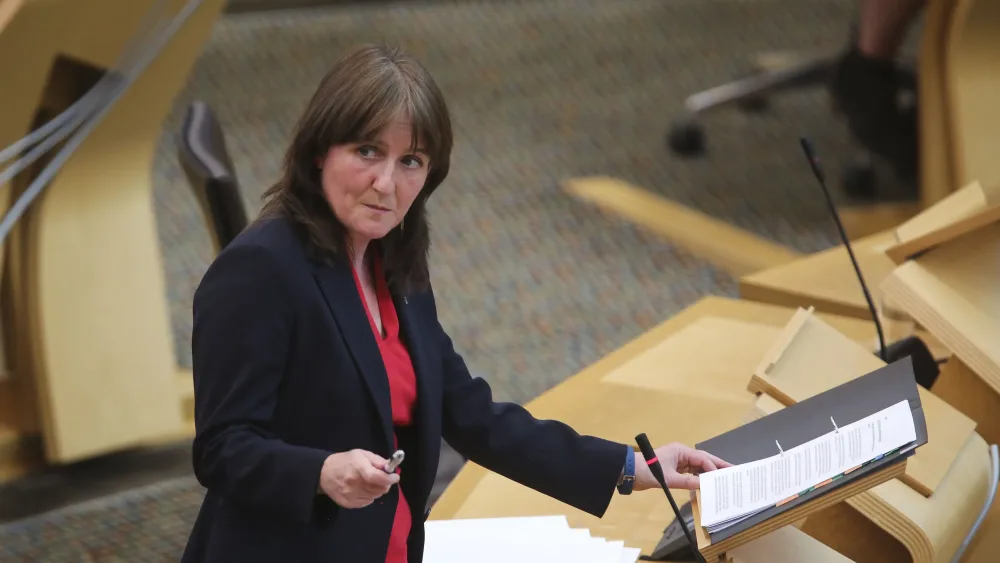
Scotland’s public health minister has written to the UK National Screening Committee (NSC) to urge it to review the recommended starting age for bowel cancer screening.
Maree Todd’s call, part of the SNP’s first 100 days in Government pledge, follows a long-term increase in colorectal cancers among under-50s in Scotland.
Between 2013 and 2023, the risk of colorectal cancer for under 50s increased by 49%. The rise was largest among women – 64% compared to 34% in men.
Public Health Scotland said research is ongoing to understand the increase.
Under current UK NSC recommendations, people aged between 50 and 74 are offered bowel cancer screening every two years.
If the UK NSC does not agree to a review, we will establish a pilot in Scotland to trial bowel cancer screening in younger people
Ms Todd urged the body to consider changing the programme.
“We have already committed that, if the UK NSC does not agree to a review, we will establish a pilot in Scotland to trial bowel cancer screening in younger people,” she said.
“Research from Public Health Scotland in September 2025 showed a significant increase in the rate of bowel cancer among those under 50 between 2013 and 2023 in Scotland, and I share the concerns among clinicians, researchers, and public health professionals regarding this upward trend among younger adults.
“Earlier detection of bowel cancer is strongly associated with improved outcomes, and I would welcome a review by the UK NSC to determine whether the evidence would support extending bowel screening to younger age groups in order to improve outcomes and achieve public health benefits for the population.”
A spokesperson for the UK Government’s Department of Health and Social Care said: “The independent UK National Screening Committee keeps all screening programmes under regular review, and the bowel cancer screening programme is guided by the best available evidence.
“In England, the NHS has recently expanded its lifesaving bowel cancer screening programme to everyone aged 50 to 74 and is rolling out a more sensitive home screening test, which is expected to detect around 600 more bowel cancers earlier each year and identify around 2,000 additional people with pre-cancerous polyps.
“We’re also cutting cancer waiting times, with 82,000 more patients receiving a cancer diagnosis or having cancer ruled out on time in the 12 months to May 2026 compared to the previous year.”